
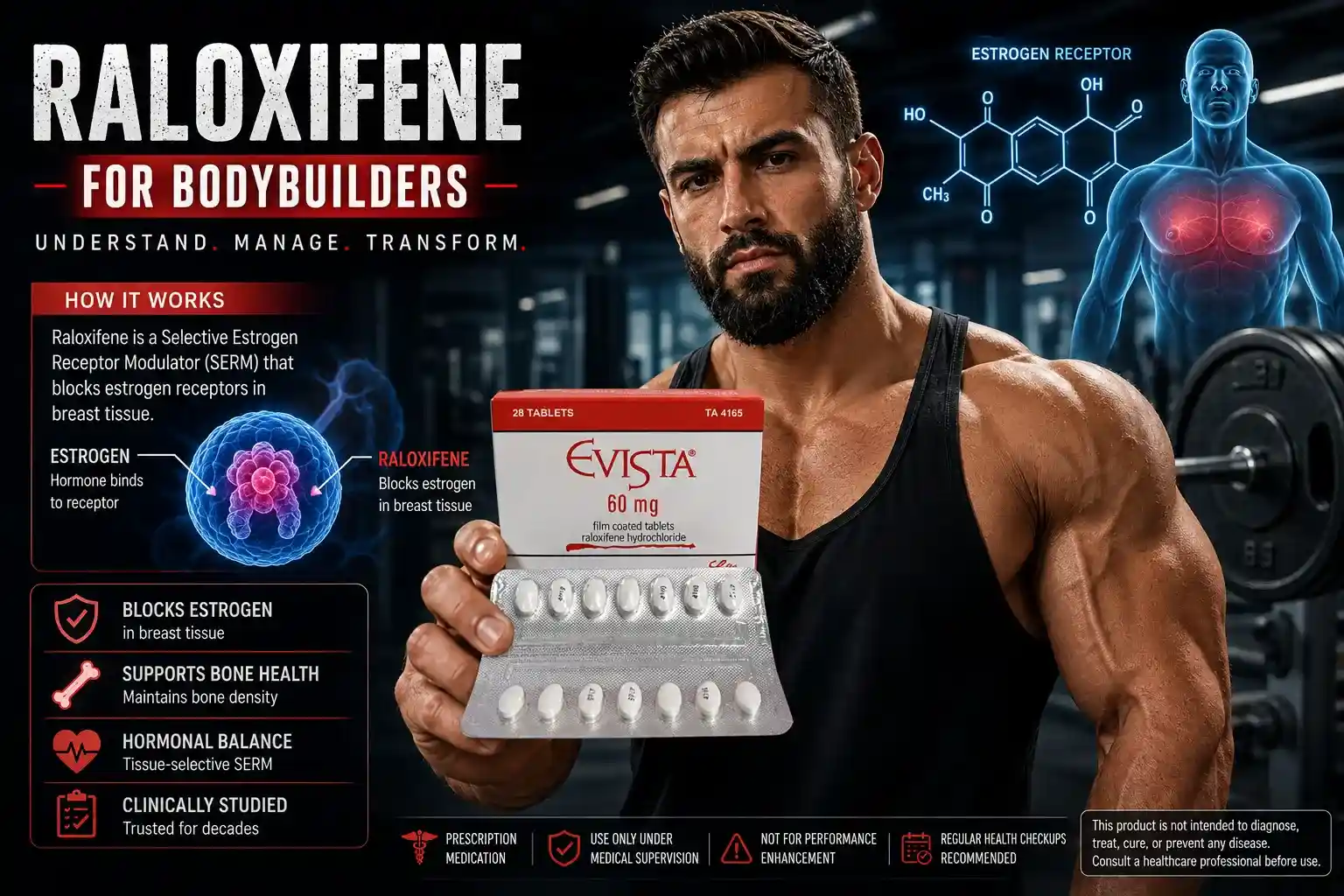
Raloxifene for Bodybuilders is one of the most discussed topics among athletes and fitness enthusiasts concerned about estrogen-related side effects, especially gynecomastia. Although Raloxifene is a prescription Selective Estrogen Receptor Modulator (SERM) approved for specific medical conditions, it is often discussed in bodybuilding communities for its potential role in managing breast tissue changes. At SteroidMart, we aim to provide educational information to help users better understand products commonly discussed in the fitness and bodybuilding community. This guide explains how Raloxifene works, its potential benefits, risks, side effects, and important safety considerations.
Among the medications discussed in bodybuilding communities, Raloxifene has gained attention because it belongs to a class of drugs called Selective Estrogen Receptor Modulators (SERMs). While it was originally developed to treat osteoporosis in postmenopausal women, some people have explored its off-label use for managing certain estrogen-related symptoms such as gynecomastia. It is not approved for bodybuilding or muscle growth, and anyone considering it should consult a qualified healthcare professional.
Unlike anabolic steroids, Raloxifene does not increase muscle mass, improve strength, or boost athletic performance. Instead, it works by interacting with estrogen receptors differently in various tissues. This tissue-selective action is what makes it an interesting topic for bodybuilders trying to understand estrogen management.
In this guide, you’ll learn what Raloxifene is, how it works, why it is discussed in bodybuilding, its potential benefits and limitations, possible side effects, comparisons with other SERMs, and commonly asked questions.
What Is Raloxifene?
Raloxifene is a prescription medication classified as a Selective Estrogen Receptor Modulator (SERM). It interacts with estrogen receptors in different parts of the body, acting like estrogen in some tissues while blocking its effects in others.
This selective behavior makes SERMs unique compared with medications that reduce estrogen production altogether.
Approved Medical Uses
Raloxifene is commonly prescribed for:
- Prevention and treatment of osteoporosis in postmenopausal women
- Reducing the risk of invasive breast cancer in certain high-risk postmenopausal women
- Supporting bone health where medically appropriate
These are its approved medical uses. Any discussion of bodybuilding applications is considered off-label.
Why Is Raloxifene for Bodybuilders So Popular?
Bodybuilders are interested in Raloxifene primarily because of its activity in breast tissue. During anabolic steroid use, hormonal changes can increase estrogenic activity, which may contribute to gynecomastia in some individuals. Because Raloxifene blocks estrogen receptors in breast tissue, it is sometimes discussed as one possible medical option for managing this issue under professional supervision.
However, it is important to understand that Raloxifene does not:
- Build muscle
- Increase testosterone directly
- Burn fat
- Improve endurance
- Replace proper post-cycle therapy protocols
Its role is much narrower and relates to estrogen receptor activity rather than performance enhancement.
Key Facts About Raloxifene
| Feature | Details |
|---|---|
| Drug Class | Selective Estrogen Receptor Modulator (SERM) |
| Brand Name | Evista |
| Prescription Required | Yes |
| FDA Approved | Yes (for specific medical conditions) |
| Muscle Builder | No |
| Testosterone Booster | No |
| Used Off-Label in Bodybuilding | Discussed mainly for gynecomastia management |
How Does Raloxifene Work?
To understand Raloxifene, it’s helpful to know a little about estrogen receptors.
Estrogen is a hormone that affects many tissues in the body, including:
- Breast tissue
- Bones
- Liver
- Blood vessels
- Brain
When estrogen binds to receptors in these tissues, it produces different biological effects.
Raloxifene interacts with these same receptors but behaves differently depending on the tissue.
In Breast Tissue
Raloxifene blocks estrogen’s activity in breast tissue. This is why it has been studied for reducing breast cancer risk in certain women and why it is sometimes discussed for gynecomastia management.
In Bone
In bone tissue, Raloxifene acts more like estrogen, helping maintain bone density. This explains its approved use for osteoporosis.
In Other Tissues
Its effects vary depending on the tissue, which is why it is called a Selective Estrogen Receptor Modulator rather than a general estrogen blocker.
Does It Lower Estrogen Levels?
No.
A common misconception is that Raloxifene lowers estrogen production. It does not reduce how much estrogen the body makes. Instead, it changes how estrogen signals are received in certain tissues by binding to estrogen receptors.
This is different from Aromatase Inhibitors (AIs), which work by decreasing estrogen production.
Benefits of Raloxifene for Bodybuilders
Raloxifene tablets belong to a group of prescription medicines known as Selective Estrogen Receptor Modulators (SERMs). These medicines interact with estrogen receptors differently across the body. Raloxifene can act like estrogen in bone tissue while blocking estrogen activity in breast tissue.
Its clinically established benefits apply mainly to certain postmenopausal women. Raloxifene is not approved as a bodybuilding, muscle-building, fat-loss, gynecomastia, or post-cycle therapy medicine.
1. Helps Prevent Bone Loss
One of the primary benefits of raloxifene is its ability to help preserve bone mineral density after menopause. Falling estrogen levels can accelerate bone loss and increase the likelihood of osteoporosis.
Raloxifene produces an estrogen-like effect in bone tissue, which helps slow the breakdown of bone. For this reason, it may be prescribed to prevent osteoporosis in suitable postmenopausal women.
2. Supports the Treatment of Postmenopausal Osteoporosis
Raloxifene may also be used to treat established osteoporosis in postmenopausal women. By reducing excessive bone resorption, it can help maintain stronger bones and lower the risk of certain osteoporosis-related fractures.
Its clearest fracture benefit is associated with reducing the risk of vertebral, or spinal, fractures. It has not demonstrated the same level of protection against every type of fracture, including hip fractures.
3. May Reduce the Risk of Invasive Breast Cancer
Raloxifene blocks estrogen activity in breast tissue. It is approved to reduce the risk of invasive breast cancer in certain postmenopausal women with osteoporosis and in some postmenopausal women considered at high risk of developing the disease.
This does not mean that it completely prevents breast cancer. It reduces risk in selected patients and does not replace breast screening, clinical examinations, or other preventive healthcare.
4. Provides Tissue-Selective Estrogen Activity
Raloxifene does not behave like estrogen in every part of the body. Its selective activity is one of its main therapeutic advantages:
- In bone, it has an estrogen-like effect that helps limit bone loss.
- In breast tissue, it blocks estrogen stimulation.
- In the uterus, it does not stimulate the uterine lining in the same way as traditional estrogen therapy.
This tissue-selective action allows raloxifene to support bone health without producing all the effects associated with systemic estrogen treatment.
5. Does Not Directly Suppress Estrogen Production
Raloxifene does not work like an aromatase inhibitor. It does not significantly lower the amount of estrogen circulating throughout the body. Instead, it modifies how estrogen acts at selected receptors.
For readers interested in bodybuilding, this distinction is important. Raloxifene should not be described as a general “estrogen killer” or as a medicine that automatically corrects elevated estrogen levels.
6. Has a Well-Studied Medical Profile
Raloxifene has been evaluated in large clinical studies involving postmenopausal women. Researchers have collected substantial information about its effects on osteoporosis, vertebral-fracture risk, breast-cancer risk reduction, and adverse reactions.
However, well-studied does not mean risk-free. The evidence supporting its approved benefits should not be used to assume that it is safe or effective for healthy male bodybuilders.
Are There Benefits for Bodybuilders?
Raloxifene does not provide direct bodybuilding benefits such as:
- Increased muscle mass
- Faster strength gains
- Improved protein synthesis
- Enhanced workout performance
- Direct testosterone boosting
- Fat loss
Its popularity in some bodybuilding communities comes mainly from off-label discussions about breast-tissue estrogen activity and gynecomastia. That is separate from its approved medical benefits, and evidence in male steroid users remains limited.
A bodybuilder with nipple tenderness, chest swelling, or a lump should not assume that raloxifene is the correct solution. Gynecomastia can be confused with chest fat and may also result from hormonal, medication-related, liver, thyroid, or other medical problems.
Important Safety Considerations
The potential benefits of raloxifene must be weighed against its risks. The medicine can increase the risk of blood clots in the legs or lungs. It may be unsuitable for people with a current or previous history of venous thromboembolism.
Commonly reported adverse effects may include:
- Hot flashes
- Leg cramps
- Joint or muscle discomfort
- Swelling
- Flu-like symptoms
Urgent medical help may be required for symptoms such as unexplained leg pain or swelling, sudden chest pain, coughing blood, or difficulty breathing.
Key Takeaway
The main evidence-based benefits of raloxifene tablets are helping prevent and treat postmenopausal osteoporosis, reducing the risk of vertebral fractures, and lowering invasive breast-cancer risk in selected postmenopausal women. Its bodybuilding-related use is off-label and should not be presented as a proven muscle-building, testosterone-enhancing, or universally effective gynecomastia treatment.
Why Do Bodybuilders Talk About Raloxifene?
Although Raloxifene is not a bodybuilding drug, it often appears in discussions because some steroid users experience estrogen-related side effects.
Possible reasons it is mentioned include:
- Concerns about gynecomastia
- Managing breast tenderness under medical guidance
- Understanding how SERMs differ from aromatase inhibitors
- Learning about tissue-selective estrogen receptor modulation
It is important to note that no medication should be used solely based on online discussions. Proper evaluation by a healthcare professional is essential, particularly because symptoms like breast enlargement can have multiple causes.
Potential Benefits in a Bodybuilding Context
While Raloxifene is not a muscle-building agent, some people discuss potential benefits such as:
1. Breast Tissue Estrogen Receptor Blockade
Its primary point of interest is blocking estrogen activity in breast tissue.
2. Bone Health
Unlike many hormone-related medications, Raloxifene has beneficial effects on bone density in approved populations.
3. No Direct Estrogen Suppression
Because it does not significantly reduce estrogen production, it may preserve some normal estrogen functions that are important for overall health.
4. Well-Studied Medical Profile
Raloxifene has been used clinically for many years for approved indications, providing healthcare providers with substantial safety information in those contexts.
Common Myths About Raloxifene
Myth 1: Raloxifene Builds Muscle
Reality: It does not increase muscle mass or athletic performance.
Myth 2: It Boosts Testosterone
Reality: Raloxifene is not approved as a testosterone booster.
Myth 3: It Burns Fat
Reality: There is no evidence that Raloxifene is a fat-loss drug.
Myth 4: It Eliminates All Estrogen
Reality: It selectively blocks estrogen receptors in certain tissues rather than eliminating estrogen from the body.
Myth 5: Anyone Can Take It Safely
Reality: Raloxifene has potential risks, including an increased risk of blood clots in some individuals, and should only be used under medical supervision.
Raloxifene for Gynecomastia: Everything You Need to Know
One of the biggest reasons bodybuilders search for Raloxifene is because of gynecomastia, commonly known as gyno. This condition can affect both natural athletes and steroid users, causing enlargement of breast tissue in males.
Although gynecomastia is not usually dangerous, it can be physically uncomfortable and emotionally frustrating. Many bodybuilders work hard to build a lean, muscular chest, so the appearance of swollen or enlarged breast tissue can be discouraging.
Raloxifene is frequently discussed because it is a Selective Estrogen Receptor Modulator (SERM). Instead of lowering estrogen levels throughout the body, it selectively blocks estrogen receptors in breast tissue. This is why healthcare professionals may consider it in certain situations involving estrogen-sensitive breast tissue. However, it is not approved specifically for steroid-induced gynecomastia, and treatment decisions should always be made by a qualified healthcare provider.
What Is Gynecomastia?
Gynecomastia is the growth of glandular breast tissue in males, usually caused by an imbalance between estrogen and testosterone activity.
Many people confuse gynecomastia with chest fat (pseudogynecomastia), but they are different conditions.
True Gynecomastia
True gynecomastia involves the growth of breast gland tissue and may include:
- A firm lump beneath the nipple
- Tenderness or pain
- Puffy nipples
- Swelling on one or both sides
- Increased breast tissue
Pseudogynecomastia
Pseudogynecomastia is caused by excess fat accumulation in the chest rather than glandular tissue. It is more common in overweight individuals and generally improves with weight loss.
Understanding the difference is important because treatment approaches may vary.
What Causes Gynecomastia?
Several factors can contribute to gynecomastia, including:
1. Hormonal Imbalance
An increase in estrogen activity or a decrease in testosterone can stimulate breast tissue growth.
2. Puberty
Teenage boys may experience temporary gynecomastia due to hormonal changes. In many cases, it resolves on its own.
3. Certain Medications
Some prescription medications can contribute to gynecomastia as a side effect.
4. Medical Conditions
Conditions affecting the liver, kidneys, thyroid, or hormone-producing glands can alter hormone balance.
5. Anabolic Steroid Use
This is one of the most discussed causes in bodybuilding.
Some anabolic steroids can increase estrogenic activity directly or indirectly. Elevated estrogen signaling in breast tissue may contribute to gynecomastia in susceptible individuals.
Signs and Symptoms of Gynecomastia
Recognizing symptoms early can help guide appropriate medical evaluation.
Common signs include:
- Puffy nipples
- Swollen chest tissue
- A rubbery or firm lump beneath the nipple
- Chest tenderness
- Mild pain when touched
- Uneven breast size
- Enlarged chest despite low body fat
If symptoms appear suddenly, are severe, or involve discharge or significant pain, prompt medical evaluation is important.
Can Raloxifene Help with Gynecomastia?
This is one of the most searched questions online.
The Short Answer
Some clinical studies and case reports suggest that raloxifene may help reduce symptoms of gynecomastia in certain individuals, particularly when evaluated and prescribed by a healthcare professional. Results vary depending on the cause, duration, and severity of the condition.
Long-standing gynecomastia with significant fibrous tissue may not respond well to medication, and surgery may be considered in some cases.
Why Is Raloxifene Discussed?
Breast tissue contains estrogen receptors.
Raloxifene binds to these receptors and reduces estrogen’s ability to stimulate breast tissue growth. Because of this mechanism, it is sometimes considered in medical management of gynecomastia.
However, it is important to remember:
- It is not a guaranteed solution.
- It does not eliminate existing fibrous tissue in every case.
- Early medical evaluation generally offers more treatment options
Can Raloxifene Prevent Gynecomastia?
Some bodybuilders discuss using SERMs to reduce estrogen-related breast tissue stimulation, but prevention strategies depend on the individual’s medical situation, hormone levels, and any medications being used.
Rather than self-medicating, athletes should:
- Monitor hormone-related symptoms.
- Seek medical advice if changes occur.
- Avoid unnecessary or excessive anabolic steroid use.
- Follow evidence-based guidance instead of internet anecdotes.
Raloxifene vs Tamoxifen
Tamoxifen (Nolvadex) is another SERM that is frequently discussed in relation to gynecomastia.
Feature | Raloxifene | Tamoxifen |
|---|---|---|
Drug Class | SERM | SERM |
Blocks Breast Estrogen Receptors | Yes | Yes |
FDA Approved for Gynecomastia | No | No |
Common Medical Uses | Osteoporosis, breast cancer risk reduction | Breast cancer treatment and prevention |
Bodybuilding Interest | Gynecomastia discussions | Gynecomastia and PCT discussions |
Key Differences
Raloxifene
- Primarily approved for osteoporosis in postmenopausal women.
- Acts selectively on estrogen receptors.
- Often discussed for breast tissue-related concerns.
Tamoxifen
- Has a longer history of use in breast cancer treatment.
- More commonly referenced in bodybuilding communities for post-cycle therapy (PCT), although such use is off-label.
The choice between medications depends on medical evaluation rather than bodybuilding preference.
Raloxifene vs Clomid
Another frequently searched comparison is Raloxifene vs Clomid (Clomiphene Citrate).
Feature | Raloxifene | Clomid |
Drug Class | SERM | SERM |
Primary Approved Use | Osteoporosis | Female infertility |
Blocks Breast Estrogen | Yes | Indirectly affects estrogen signaling |
Common Discussion in Bodybuilding | Gynecomastia | Post-cycle therapy |
Which One Is Better?
They serve different medical purposes.
Clomid is generally discussed for stimulating hormonal pathways related to fertility, whereas Raloxifene is more often discussed for breast tissue receptor activity.
They should not be considered interchangeable without medical advice
Raloxifene vs Aromatase Inhibitors (AIs)
Many beginners assume SERMs and Aromatase Inhibitors do the same thing.
They do not.
What Are Aromatase Inhibitors?
Aromatase inhibitors reduce the body’s production of estrogen by blocking the aromatase enzyme.
Examples include:
- Arimidex (Anastrozole)
- Aromasin (Exemestane)
- Letrozole
How Are They Different?
SERM | Aromatase Inhibitor |
Blocks estrogen receptors in selected tissues | Reduces estrogen production |
Does not significantly lower estrogen levels | Lowers estrogen levels throughout the body |
Tissue selective | Whole-body effect |
This distinction is important because estrogen also supports bone health, cardiovascular function, and other normal physiological processes.
Common Mistakes Bodybuilders Make
Many athletes make decisions based on advice from online forums instead of qualified healthcare professionals.
Some common mistakes include:
- Assuming every chest lump is gynecomastia.
- Confusing chest fat with glandular tissue.
- Self-prescribing hormone-related medications.
- Ignoring side effects.
- Combining multiple hormone-modifying drugs without supervision.
- Believing higher doses always produce better results.
These practices can increase health risks and may not address the underlying issue.
When Should You See a Doctor?
Medical evaluation is recommended if you notice:
- Persistent breast enlargement
- Pain or tenderness
- A firm lump beneath the nipple
- One-sided breast enlargement
- Nipple discharge
- Rapid changes in chest appearance
Early assessment can help determine the cause and identify appropriate treatment options
Key Takeaways
- Gynecomastia is different from chest fat.
- Hormonal imbalance is a common contributing factor.
- Raloxifene is discussed because it blocks estrogen receptors in breast tissue.
- It does not increase muscle mass or testosterone.
- Tamoxifen, Clomid, and aromatase inhibitors have different medical roles.
- Any hormone-related medication should only be used under medical supervision.
Can You Use Raloxifene During a Steroid Cycle?
One of the most common questions among bodybuilders is whether Raloxifene can be used while running an anabolic steroid cycle. Since certain anabolic steroids may increase estrogenic activity, some athletes look for ways to manage estrogen-related side effects.
However, it is important to understand that Raloxifene is not designed to enhance muscle growth, improve strength, or replace proper cycle planning. Its approved medical uses are unrelated to bodybuilding, and any use during a steroid cycle is considered off-label.
Healthcare professionals evaluate many factors before prescribing hormone-related medications, including medical history, symptoms, and potential risks. Self-medicating based on advice from online forums can increase the chance of complications.
Why Do Some Bodybuilders Discuss Using Raloxifene On-Cycle?
The primary reason is concern about estrogen-related breast tissue changes, such as:
- Puffy nipples
- Breast tenderness
- Early signs of gynecomastia
- Swelling around the nipple area
Because Raloxifene blocks estrogen receptors in breast tissue, it is often mentioned in discussions about managing these symptoms. It does not prevent every estrogen-related side effect, and it does not reduce estrogen production throughout the body.
No.
This is one of the biggest misconceptions in bodybuilding communities.
Raloxifene does not lower estrogen levels. Instead, it works by blocking estrogen receptors in specific tissues, especially breast tissue.
This is very different from Aromatase Inhibitors (AIs), which reduce estrogen production by blocking the aromatase enzyme.
Raloxifene | Aromatase Inhibitor |
Blocks estrogen receptors | Lowers estrogen production |
Tissue selective | Whole-body estrogen reduction |
Does not directly decrease estrogen levels | Can significantly decrease estrogen levels |
Understanding this difference helps prevent unrealistic expectations.
Raloxifene and Post Cycle Therapy (PCT)
What Is Post Cycle Therapy?
After an anabolic steroid cycle, the body’s natural hormone production may take time to recover. The goal of PCT is to support the restoration of normal hormonal function under medical guidance.
A well-planned recovery strategy is important because suppressed hormone production may affect:
- Energy levels
- Mood
- Libido
- Muscle retention
- Overall well-being
Why Are SERMs Used in PCT?
SERMs interact with estrogen receptors and may influence hormonal feedback mechanisms. This is why medications such as Tamoxifen (Nolvadex) and Clomiphene (Clomid) are more commonly discussed in relation to PCT.
Raloxifene is less commonly used for this purpose, and evidence supporting it as a primary PCT medication is more limited.
Can Raloxifene Replace Clomid or Tamoxifen?
Not necessarily.
Each medication has a different clinical profile, approved indications, and body of research.
While all three belong to the SERM family, they are not interchangeable.
The choice of medication depends on:
- Medical history
- Hormone levels
- Treatment goals
- Professional medical advice
Learn more in our Complete Guide to Post Cycle Therapy (PCT).
Potential Benefits of Raloxifene
1. Breast Tissue Estrogen Receptor Blockade
Its best-known feature is blocking estrogen receptors in breast tissue. This is why it is often mentioned when discussing gynecomastia management.
2. Bone Health Support
Unlike many hormone-related medications, Raloxifene has beneficial effects on bone density in its approved medical uses.
Maintaining healthy bones is important for:
- Heavy weight training
- Joint support
- Long-term skeletal health
3. Tissue-Selective Action
Raloxifene does not affect every tissue in the same way.
It behaves differently in:
- Breast tissue
- Bones
- Liver
- Cardiovascular system
This selective activity distinguishes it from medications that lower estrogen throughout the body.
4. Well-Established Clinical Experience
Raloxifene has been prescribed for many years for approved medical conditions.
This means healthcare professionals have extensive safety information about its use in those approved populations.
What Raloxifene Cannot Do
Many beginners develop unrealistic expectations after reading online forums.
Let’s clear up some common myths.
It Does NOT:
- Build muscle
- Increase protein synthesis
- Burn body fat
- Improve endurance
- Boost strength
- Increase testosterone directly
- Replace anabolic steroids
- Eliminate all estrogen
Understanding these limitations helps set realistic expectations.
Possible Side Effects of Raloxifene
Like all prescription medications, Raloxifene may cause side effects. Not everyone experiences them, but users should be aware of potential risks.
Some reported side effects include:
- Hot flashes
- Leg cramps
- Muscle pain
- Headache
- Flu-like symptoms
- Joint pain
- Sweating
- Mild swelling
These effects vary between individuals.
Although uncommon, more serious complications can occur.
These may include:
- Blood clots (deep vein thrombosis)
- Pulmonary embolism
- Stroke (in certain high-risk individuals)
- Severe allergic reactions
These risks are one reason why Raloxifene should only be taken under medical supervision.
Who Should Avoid Raloxifene?
Raloxifene is not suitable for everyone.
Healthcare professionals may advise against its use in people with:
- A history of blood clots
- Active deep vein thrombosis (DVT)
- Pulmonary embolism
- Pregnancy
- Breastfeeding
- Severe liver disease
- Certain cardiovascular conditions
- Known allergy to Raloxifene or its ingredients
Always disclose your complete medical history before starting any prescription medication.
Drug Interactions
Raloxifene may interact with other medications.
Potential interactions include:
- Blood thinners (such as warfarin)
- Cholestyramine
- Certain hormone therapies
- Some thyroid medications
If you take prescription medicines regularly, consult your healthcare provider before using Raloxifene.
Is Raloxifene for Bodybuilders Safe?
Whether you’re a competitive athlete or recreational lifter, safety should always come first.
Best Practices
✔ Get blood work before making hormone-related decisions.
✔ Never self-diagnose gynecomastia.
✔ Consult a qualified healthcare professional for persistent symptoms.
✔ Avoid stacking multiple hormone-modifying medications without medical advice.
✔ Understand that more medication does not necessarily produce better results.
✔ Prioritize long-term health over short-term cosmetic goals.
Key Takeaways
- Raloxifene is not a muscle-building drug.
- It works by selectively blocking estrogen receptors in certain tissues.
- It is commonly discussed in relation to gynecomastia, not athletic performance.
- It is less commonly discussed for PCT than some other SERMs.
- Side effects and contraindications mean medical supervision is important.
- Understanding what Raloxifene can—and cannot—do helps bodybuilders make more informed decisions.
General Medical Overview of Raloxifene Use
After learning what Raloxifene is, how it works, and why it is discussed in bodybuilding communities, it’s important to understand that Raloxifene is a prescription medication intended for approved medical conditions—not for improving athletic performance.
Its primary approved uses include:
- Prevention and treatment of osteoporosis in postmenopausal women
- Reducing the risk of invasive breast cancer in certain high-risk postmenopausal women
In bodybuilding circles, Raloxifene is usually discussed because of its tissue-selective effects on estrogen receptors, especially in breast tissue. However, this remains an off-label use and should only be considered under medical supervision.
Storage and Handling
Proper storage helps maintain medication quality.
General recommendations include:
- Store at room temperature unless otherwise instructed.
- Keep tablets in their original packaging.
- Protect from excessive moisture and heat.
- Keep out of reach of children and pets.
- Do not use expired medication.
- Dispose of unused medication according to local pharmacy or healthcare guidance.
Lifestyle Tips for Bodybuilders
No medication can replace good training habits and overall health management.
If your goal is to build muscle while minimizing health risks, focus on the fundamentals:
1. Follow a Structured Training Program
Progressive overload remains one of the most effective ways to build strength and muscle. Prioritize proper technique, adequate recovery, and consistent progression rather than chasing quick fixes.
2. Prioritize Nutrition
A balanced diet should include:
- High-quality protein
- Complex carbohydrates
- Healthy fats
- Plenty of vegetables and fruits
- Adequate hydration
Good nutrition supports recovery, performance, and overall health.
3. Sleep and Recovery
Muscle growth happens during recovery—not just in the gym.
Aim for 7–9 hours of quality sleep per night and allow enough recovery time between intense training sessions.
4. Monitor Your Health
Regular health check-ups and blood work can help identify potential issues early, especially for individuals using hormone-related medications under medical care.
Myths vs Facts About Raloxifene
Myth | Fact |
Raloxifene builds muscle. | No. It is not an anabolic steroid. |
It increases testosterone. | It is not approved as a testosterone booster. |
It burns body fat. | It has no established fat-burning effect. |
It eliminates estrogen. | It selectively blocks estrogen receptors in certain tissues rather than removing estrogen from the body. |
It replaces proper PCT. | It should not be viewed as a replacement for individualized medical care or evidence-based recovery strategies. |
It has no side effects. | Like all medications, it carries potential risks and side effects. |
It is safe for everyone. | Certain medical conditions, such as a history of blood clots, may make it unsuitable. |
Higher doses work better. | More is not always better and may increase the risk of adverse effects. |
(FAQ) About Raloxifene for Bodybuilders
What is Raloxifene?
Raloxifene is a Selective Estrogen Receptor Modulator (SERM) approved for treating osteoporosis and reducing breast cancer risk in certain postmenopausal women.
Is Raloxifene an anabolic steroid?
No. It is not an anabolic steroid.
Does Raloxifene build muscle?
No. There is no evidence that Raloxifene directly increases muscle mass or strength.
Can bodybuilders use Raloxifene?
Some bodybuilders discuss its off-label use for gynecomastia management, but it is not approved for bodybuilding and should only be used under medical supervision.
Does Raloxifene lower estrogen?
No. It blocks estrogen receptors in selected tissues instead of lowering estrogen production.
Is Raloxifene better than Tamoxifen?
They are different medications with different approved uses and clinical evidence. The best choice depends on the individual’s medical situation
Can Raloxifene prevent gynecomastia?
Some studies suggest it may help in certain cases of gynecomastia, but it is not guaranteed to prevent the condition.
Can Raloxifene remove existing gynecomastia?
It may help reduce symptoms in some individuals, particularly when addressed early. Long-standing fibrous tissue may require surgery.
Is Raloxifene used in PCT?
It is discussed less often than Tamoxifen or Clomiphene for post-cycle therapy. Evidence for its use as a primary PCT medication is limited.
Does Raloxifene affect fertility?
If fertility is a concern, discuss this with a healthcare professional, as individual circumstances vary.
Can women take Raloxifene?
Yes, but only for approved medical indications and under a doctor’s supervision.
Can teenagers use Raloxifene?
It should only be used when prescribed by a qualified healthcare provider.
Is Raloxifene available without a prescription?
Prescription requirements vary by country. Always follow local laws and medical guidance.
Can I combine Raloxifene with other hormone-related medications?
Do not combine prescription medications without medical advice, as interactions and risks may occur.
What are the most common side effects?
Possible side effects include hot flashes, leg cramps, headaches, joint pain, and, in some cases, more serious complications such as blood clots.
Can women use Raloxifene?
Yes, but only for approved medical conditions and under a doctor’s supervision. It is commonly prescribed for certain postmenopausal women.
Is Raloxifene legal?
Yes. It is a legal prescription medication in many countries when prescribed for approved medical uses. Regulations vary by country.
Is Raloxifene safe for healthy bodybuilders?
Safety depends on the individual. Because it carries potential risks—including blood clots—it should not be used without medical evaluation.
Conclusion
Raloxifene for Bodybuilders remains a widely discussed topic because of its potential role in managing estrogen-related breast tissue changes. While it has approved medical uses, it is not a muscle-building drug and should only be used under medical supervision.